ترجمه عمران - 27 صفحه
سال 2005
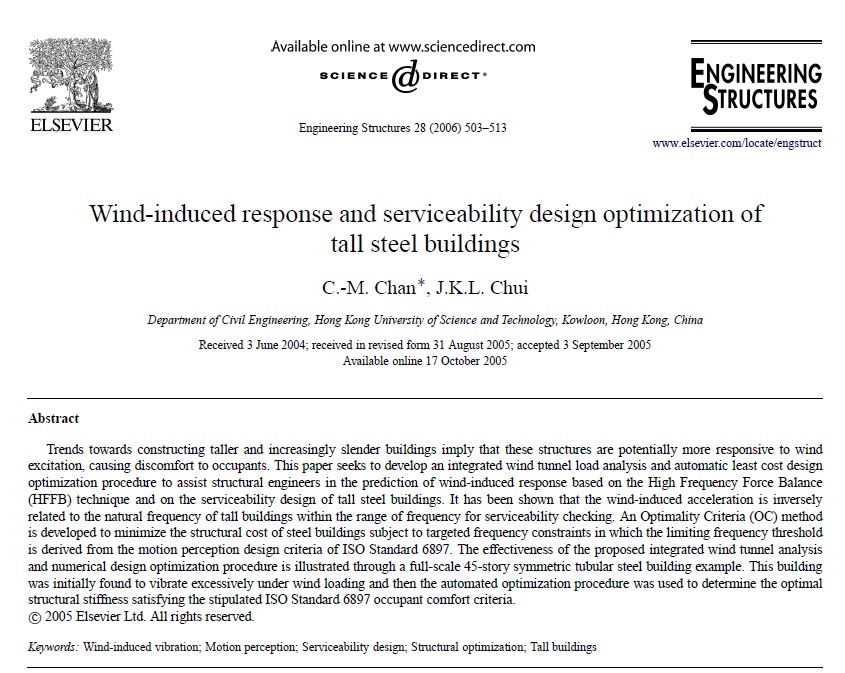
Wind-induced response and serviceability design optimization of tall steel buildings
پاسخ های القا شده از طرف باد و بهینه سازی طراحی با قابلیت سرویس پذیری در ساختمان های فولادی بلند
C.-M. Chan,J.K.L. Chui
http://www.sciencedirect.com/science/article/pii/S0141029605003238
دانلود رایگان مقاله انگلیسی - باد و بهینه سازی طراحی در ساختمان های فولادی بلند
چکیده
تمایلات به سمت ایجاد ساختمان های بلند تر و باریک تر موجب شده است که این ساختمان ها نسبت به تحریک های باد پاسخ نشان بدهند و این موضوع موجب عدم راحتی برای ساکنین میشود. این مقاله تلاش دارد تا یک تحلیل بار گذاری تونل بادی را انجام داده و یک بهینه سازی طراحی با کمترین قیمت ممکن را پیدا کند تا به مهندسان عمران کمک کند تا بتوانند پاسخ های ساختمان را نسبت به باد در تعادل نیرو فرکانس بالا(HFFB) پیش بینی کرده و برای آن تمهیداتی را در نظر بگیرند تا طراحی های خدمات پذیر در ساختمان های بلند ایجاد شود. این موضوع نشان داده شده است که شتاب های ایجاد شده در اثر باد به صورت معکوس مرتبط با فرکانس های طبیعی ساختمان در گستره ی فرکانس های بررسی خدمات پذیری میباشد. یک روش معیار بهینه (OC) برای کمینه کردن هزینه ی ساختار ساختمان های فولادی تحت محدودیت های فرکانس هدف توسعه یافته است که در این طرح آستانه فرکانس های محدود کننده از روش معیار دریافت حرکت در استاندارد های ISO 6897 به دست آمده است. تاثیر روش پیشنهاد شده با استفاده از تحلیل تونل بادی و روند های بهینه سازی و طراحی عددی در نمونه ای با 45 ساختمان فولادی کامل و متقارن، نشان داده شده است. این ساختمان ها نخست تحت بارگذاری های بادی به شدت لرزش میکنند و سپس روند های بهینه سازی خودکار باید میزان سفتی مورد نیاز برای ساختمان را مشخص کنند که این سفتی مطابق با معیار راحتی ساکنان در استاندارد ISO 6897 باشد.
Abstract
Trends towards constructing taller and increasingly slender buildings imply that these structures are potentially more responsive to wind excitation, causing discomfort to occupants. This paper seeks to develop an integrated wind tunnel load analysis and automatic least cost design optimization procedure to assist structural engineers in the prediction of wind-induced response based on the High Frequency Force Balance (HFFB) technique and on the serviceability design of tall steel buildings. It has been shown that the wind-induced acceleration is inversely related to the natural frequency of tall buildings within the range of frequency for serviceability checking. An Optimality Criteria (OC) method is developed to minimize the structural cost of steel buildings subject to targeted frequency constraints in which the limiting frequency threshold is derived from the motion perception design criteria of ISO Standard 6897. The effectiveness of the proposed integrated wind tunnel analysis and numerical design optimization procedure is illustrated through a full-scale 45-story symmetric tubular steel building example. This building was initially found to vibrate excessively under wind loading and then the automated optimization procedure was used to determine the optimal structural stiffness satisfying the stipulated ISO Standard 6897 occupant comfort criteria.
Keywords
Wind-induced vibration; Motion perception; Serviceability design; Structural optimization; Tall buildings