ترجمه عمران-24 صفحه
سال 2005
James M.W. Brownjohn
Lateral loading and response for a tall building in the non-seismic doldrums
بارگذاری جانبی و پاسخ برای یک ساختمان مرتفع (بلند) در مناطق استوایی غیر لرزه ای
http://www.sciencedirect.com/science/article/pii/S0141029605002269
دانلود رایگان مقاله انگلیسی - بارگذاری جانبی و پاسخ برای یک ساختمان مرتفع
چکیده
موقعیت طراحی ساختمان در مقابل تاثیرات باد و زمین لرزه در سنگاپور منحصر به فرد است. هیچ آیین نامه ای برای طراحی لرزه ای وجود ندارد زیرا هیچ زمین لرزه ی محلی وجود ندارد، هنوز هم تاثیرات زمین لرزه های منطقه ای قابل توجهی در بسیاری از ساختمان های مرتفع در سنگاپور احساس می شوند. در حالی که مشهود است بادهای قوی تر سنگاپور از طوفان و بوران نشات می پذیرند ، طراحی ساختمان ها در برابر باد توسط شرایط و الزامات قانونی با استفاده از طراحی اختیاری سرعت باد در آیین نامه بارگیری بریتانیا اعمال شده است که به سیستم های بادی (فصل طوفان) نسبت داده می شود. بازبینی ده ساله ی برج اداری 280 متری نشان می دهد که زمین لرزه های قوی دوربرد پاسخ دینامیک را با شدت بیشتری تولید می کنند این امر به سبب قوی ترین بادهایی است که در زمان مشابه اتفاق می افتند. تاثیر این بادها در بلوک های آپارتمانی مرتفع بیشتر است و مشهود است که در رخدادهای شدید با مدت زمان بازگشت مشابه، تاثیرات زمین لرزه باید طراحی بار جانبی را برحسب برش های پایه (اولیه) دینامیک در برخی شرایط کنترل کنند. در حال حاضر ، مولفان کنترل ساختمان آیین نامه هایی را برای خروج از مرکز به صورت اتفاقی در نظر گرفته اند که در پوشش بارهای لرزه ای کافی هستند. درحالیکه حرکات موجود در مقابل یک کد بار نسبی ، سوالاتی را درباره ی رابطه ی تاثیرات دینامیک و استاتیک به سبب گردبادها(تندرها) و شرایط طوفانی ایجاد می کنند. در این مقاله ، شواهد مربوط به ماهیت دو شکل بارگیری شرح داده شده اند و کدآیین نامه ها و آیین نامه های مختلف موجود آزمایش شده اند.
کلید واژه ها:ساختمان مرتفع، کد ارتعاش، بارگیری باد، طراحی لرزه ای، ابزار سازی (ابزار دقیق) ساختمان
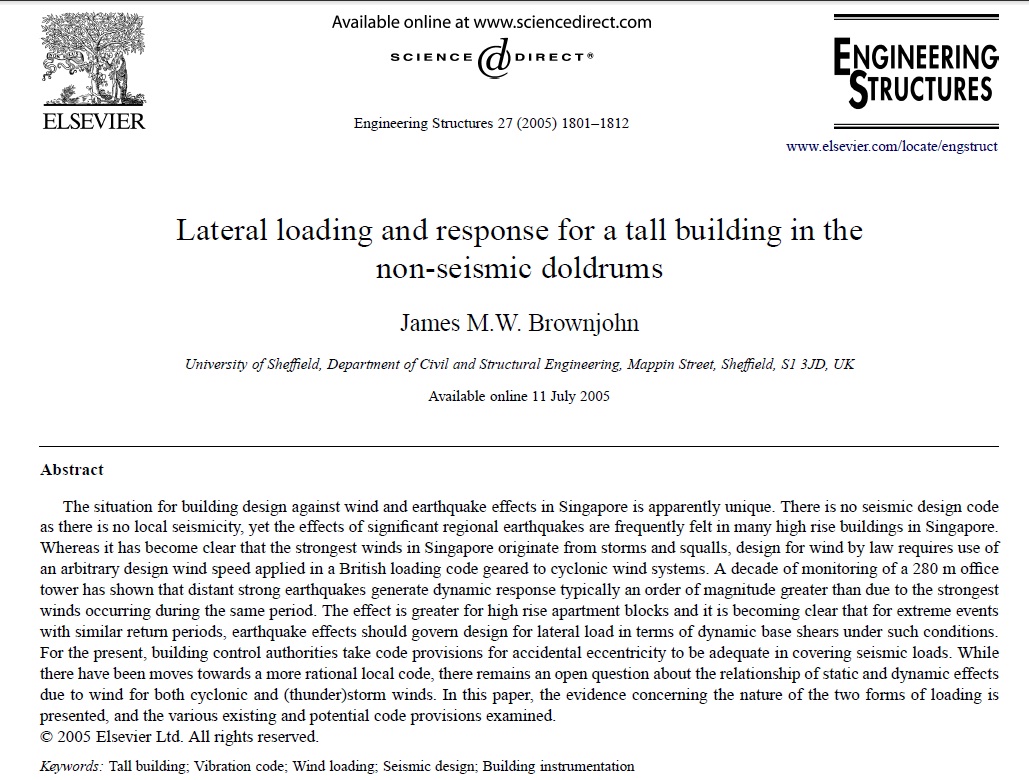
Abstract
The situation for building design against wind and earthquake effects in Singapore is apparently unique. There is no seismic design code as there is no local seismicity, yet the effects of significant regional earthquakes are frequently felt in many high rise buildings in Singapore. Whereas it has become clear that the strongest winds in Singapore originate from storms and squalls, design for wind by law requires use of an arbitrary design wind speed applied in a British loading code geared to cyclonic wind systems. A decade of monitoring of a 280 m office tower has shown that distant strong earthquakes generate dynamic response typically an order of magnitude greater than due to the strongest winds occurring during the same period. The effect is greater for high rise apartment blocks and it is becoming clear that for extreme events with similar return periods, earthquake effects should govern design for lateral load in terms of dynamic base shears under such conditions. For the present, building control authorities take code provisions for accidental eccentricity to be adequate in covering seismic loads. While there have been moves towards a more rational local code, there remains an open question about the relationship of static and dynamic effects due to wind for both cyclonic and (thunder)storm winds. In this paper, the evidence concerning the nature of the two forms of loading is presented, and the various existing and potential code provisions examined.
Keywords
Tall building; Vibration code; Wind loading; Seismic design; Building instrumentation