ترجمه شهرسازی معماری -22 صفحه
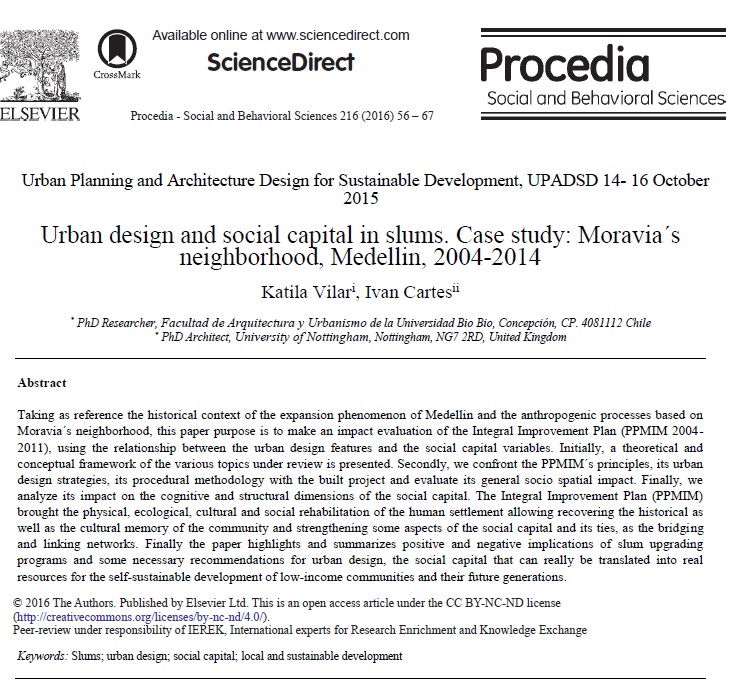
Urban Design and Social Capital in Slums. Case Study: Moravia's Neighborhood, Medellin, 2004-2014
سال 2016
طراحی شهری و سرمایه اجتماعی در محله های فقیرنشین. مطالعه موردی: محله موراویا، مدلین، 2004-2014
http://dx.doi.org/10.1016/j.sbspro.2015.12.008
Katila Vilar. Ivan Cartes
دانلود رایگان مقاله انگلیسی-طراحی شهری فقیرنشین
چکیده
با توجه به بافت تاریخی پدیده گسترده مدلین و فرآیندهای انسانی(مربوط به برخورد و تماس بشر با طبیعت) در محله موراویا، هدف این مقاله این است که تاثیر طرح بهبودسازی یکپارچه (PPMIM 20042011) را با استفاده از رابطه ی موجود بین ویژگی های طراحی شهری و متغیرهای سرمایه اجتماعی(پایتخت اجتماعی) مورد بررسی و ارزیابی قرار دهد. در ابتدا، یک چارچوب نظری و مفهومی درباره موضوعات مختلفِ مورد مطالعه ارائه میگردد. دوم، اصول PPMIM، استراتژی های طراحی شهری، و روش های عملی ویا رویه ای با پروژه ساخته شده مقایسه میشوند و تاثیرات فضایی(مکانی)- اجتماعی به طور کلی مورد بررسی و ارزیابی قرار میگیرند. در نهایت، تاثیر PPMIM بر ابعاد شناختی و ساختاری سرمایه اجتماعی تجزیه و تحلیل قرار میشود. طرح بهبودسازی یکپارچه (PPMIM) در محل های سکونت انسان، نوسازی و توانبخشی های فیزیکی، زیست محیطی، فرهنگی و اجتماعی را به ارمغان می آورد و در عین حال باعث و ترمیم و بهبود حافظه (آثار) تاریخی و همچنین فرهنگی جامعه و تقویت برخی از جنبه های سرمایه اجتماعی و عوامل مربوط به ان -با پل زنی(برقراری رابطه) و ایجاد شبکه های ارتباطی- میشود. در نهایت، این مقاله بر پیامدهای مثبت و منفی برنامه های ارتقایی و پیشرفت(بهبود امکانات) محله های فقیرنشین و برخی از توصیه نامه های لازم برای طراحی شهری، سرمایه اجتماعی تاکید دارد که در واقع این قابلیت را دارند تا به منابع واقعی برای رشد پایدار جوامع کم درآمد و نسل های آینده، تبدیل شوند..
Abstract
Taking as reference the historical context of the expansion phenomenon of Medellin and the anthropogenic processes based on Moravia's neighborhood, this paper purpose is to make an impact evaluation of the Integral Improvement Plan (PPMIM 2004-2011), using the relationship between the urban design features and the social capital variables. Initially, a theoretical and conceptual framework of the various topics under review is presented. Secondly, we confront the PPMIM's principles, its urban design strategies, its procedural methodology with the built project and evaluate its general socio spatial impact. Finally, we analyze its impact on the cognitive and structural dimensions of the social capital. The Integral Improvement Plan (PPMIM) brought the physical, ecological, cultural and social rehabilitation of the human settlement allowing recovering the historical as well as the cultural memory of the community and strengthening some aspects of the social capital and its ties, as the bridging and linking networks. Finally the paper highlights and summarizes positive and negative implications of slum upgrading programs and some necessary recommendations for urban design, the social capital that can really be translated into real resources for the self-sustainable development of low-income communities and their future generations.
Keywords
Slums; urban design; social capital; local and sustainable development