ترجمه مکانیک -16 صفحه
Rings for wind turbines
رینگ توربین های بادی
سال 2012
دانلود رایگان مقاله انگلیسی - توربین بادی
نمونه متن ترجمه شده
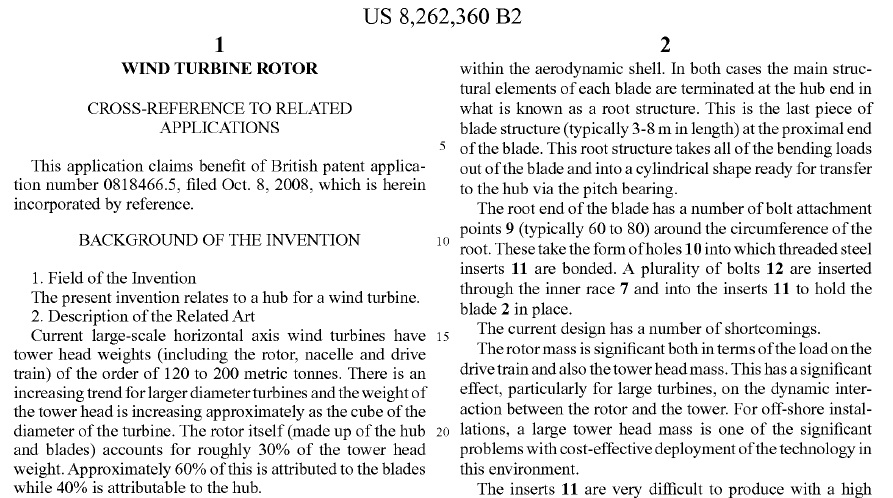
1- زمینه اختراع:اختراع مورد بحث در مورد توپی (رینگ توربین) باد است.
2- توصیف و شرح فنر و هنر مرتبط
توربینهای بادی موجود که محور افقی دارند، سنگینی و وزنهای بسیاری در برج خود تحمل می کنند (مربوط به قطعاتی همچون روتور گهواره موتور و بخشهای مرتبط کننده و اتصال کننده موتور به محورهای راه انداز ( drive train) که 120 تا 200 تن سنگینی را به دوش توربین می اندازند.
هر روزه میل و نیاز به توربینهای با قطر بزرگتر افزایش می یابد که به تبع آن وزن سربرج نیز تقریباً به اندازه توان سوم قطر توربین افزایش مییابد. خود روتور(متشکل از توپی و پرهها) تقریباً 30 درصد وزن سر برج را به خود اختصاص می دهد. تقریباً60 درصد وزن روتور به پرهها و 40 درصد دیگر به توپی بر میگردد.
Wind turbine design is the process of defining the form and specifications of a wind turbine to extract energy from the wind.[1] A wind turbine installation consists of the necessary systems needed to capture the wind's energy, point the turbine into the wind, convert mechanical rotation into electrical power, and other systems to start, stop, and control the turbine. This article covers the design of horizontal axis wind turbines (HAWT) since the majority of commercial turbines use this design. In 1919 the physicist Albert Betz showed that for a hypothetical ideal wind-energy extraction machine, the fundamental laws of conservation of mass and energy allowed no more than 16/27 (59.3%) of the kinetic energy of the wind to be captured. This Betz' law limit can be approached by modern turbine designs which may reach 70 to 80% of this theoretical limit. In addition to aerodynamic design of the blades, design of a complete wind power system must also address design of the hub, controls, generator, supporting structure and foundation. Further design questions arise when integrating wind turbines into electrical power grids.