ترجمه روان شناسی - 29 صفحه
Sleep in disorders of consciousness
خواب در اختلالات هوشیاری و خود آگاهی
سال 2009
Cologan V1, Schabus M, Ledoux D, Moonen G, Maquet P, Laureys S.
https://www.ncbi.nlm.nih.gov/pubmed/19524464
دانلود رایگان مقاله انگلیسی- اختلال خواب
چکیده
از دیدگاه رفتاری و همچنین زیست شناسی عصب، خواب و هوشیاری به یکدیگر مربوط هستند.درک بهتر چرخه های خواب و ساختار خواب بیمارانی که از اختلالات هوشیاری(DOC) رنج می برند، ممکن است درمان و مراقبت بالینی را برای این بیماران و همچنین درک ما از ارتباطات عصبی هوشیاری اصلاح نماید. تعریف خواب در بیمارانی که از نظر مغزی آسیب شدید دیده اند، هم در الکتروفیزیولوژیک و هم در الگوهای خوابی که در بسیاری از روش ها و مسیرها متفاوت مرتبط با سلامت افراد هستند، مشکل ساز و مسئله ای حیرت انگیز است. این مقاله در خصوص مفاهیم درگیردر مطالعه خواب بیمارانی که از اختلالات هوشیاری رنج می برند بحث می کند و قابلیت اجراء ضوابط خواب استاندارد بیماران را ارزیابی می نماید. متون موجود درخصوص حالت های اغماء و حالت نباتی و همچنین متون مربوط به حالات دامنه پراکندگی الگوهای تقریبا نرمال برای عدم سازماندهی و فقدان شدید ساختار خواب مطلوب در اختلالات هوشیاری و برخی از الگوهای مربوط به عیب شناسی و پیش بینی بیماری گزارش شده اند. در حال حاضر تعاملات خواب و هوشیاری در بیمارانی که آسیب مغزی دیده اند، یک موضوع مورد مطالعه ی محدود است اما مولفان یک زمینه ی تحقیقی بسیار جالب توجه را پیشنهاد می دهند.
کلید واژه ها: هوشیاری، اغماء، حالت نباتی، حالت هوشیاری کمینه، سندروم قفل شدگی، آسیب مغزی، خواب ، برانگیختگی، پلی سومنوگرافی
Abstract
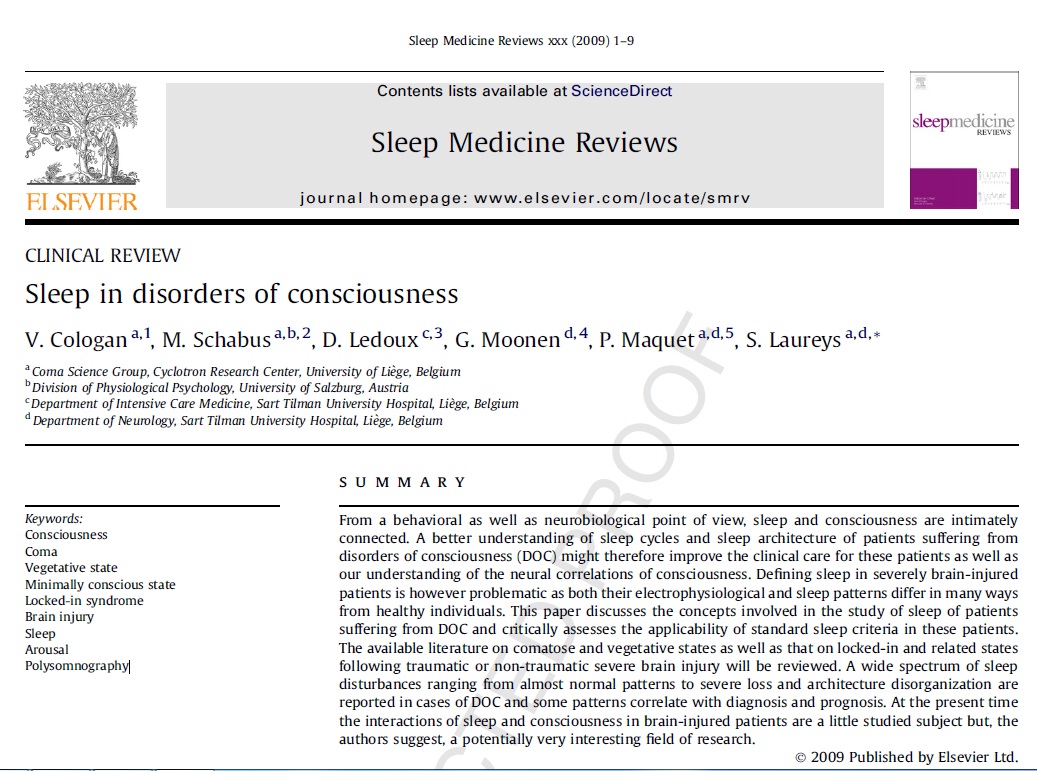
From a behavioral as well as neurobiological point of view, sleep and consciousness are intimately connected. A better understanding of sleep cycles and sleep architecture of patients suffering from disorders of consciousness (DOC) might therefore improve the clinical care for these patients as well as our understanding of the neural correlations of consciousness. Defining sleep in severely brain-injured patients is however problematic as both their electrophysiological and sleep patterns differ in many ways from healthy individuals. This paper discusses the concepts involved in the study of sleep of patients suffering from DOC and critically assesses the applicability of standard sleep criteria in these patients. The available literature on comatose and vegetative states as well as that on locked-in and related states following traumatic or non-traumatic severe brain injury will be reviewed. A wide spectrum of sleep disturbances ranging from almost normal patterns to severe loss and architecture disorganization are reported in cases of DOC and some patterns correlate with diagnosis and prognosis. At the present time the interactions of sleep and consciousness in brain-injured patients are a little studied subject but, the authors suggest, a potentially very interesting field of research.