ترجمه پزشکی -24 صفحه
Theoretical modeling in hemodynamics of microcirculation
مدلسازی نظری در همودینامیک های میکروگردش
Lee J1, Smith NP.
سال 2008
دانلود رایگان مقاله انگلیسی -همودینامیک
چکیده
طی دهه های گذشته، مدلسازی نظری مولفه غیرقابل اجتناب تحقیق همودینامیک میکروگردش شده است. مطالعات متعددی بر مدلسازی تکیه دارد تا دیدگاه های کمی درباره تعامل مکانیسم های بیوفیزیکی کنترل کننده جریان میکروگردش را فراهم کند. تغییرشکل مکانیکی هموسیت ها توسط مدل های محاسباتی پیوستار و با اطلاعات مولکولی براساس رشد اطلاعات آزمایشی مورد توجه قرار گرفته است. تحلیل های نظری جریان تک رگی و جریان شناسی خون منجر به گستره ای از رویکردهای مدلسازی شده است. تا همین اخیرا، محدودیت های محاسباتی شبیه سازی های مستقیم جریان های چندذره ای از جمله تغییرشکل و/یا تجمعی را محدود کرده بود اما مطالعات اخیر برای توجه به این چالش آغاز شده است. تحلیل های سطح شبکه دیدگاه هایی درباره اصول بیوفیزیکی زیربنای طراحی میکروگردش فراهم کرده است. این رویکرد برای تکمیل داده های آزمایشی در دسترس و به دست آوردن مدل های تجربی جریان شناسی خون میکروعروقی به کار رفته است. افزایش پیوسته در عملکرد محاسباتی اعمال شده به تکنیک های مدلسازی، شبیه سازی های بزرگ مقیاس را امکان پذیر خواهد کرد. به منظور بکارگیری این موقعیت، یکپارچه سازی رویکردهای نظری متنوع در چارچوب چندمقیاسی مورد نیاز است.
کلمات کلیدی: مدلسازی، محاسباتی، چندمقیاسی، بررسی ریاضی
Abstract
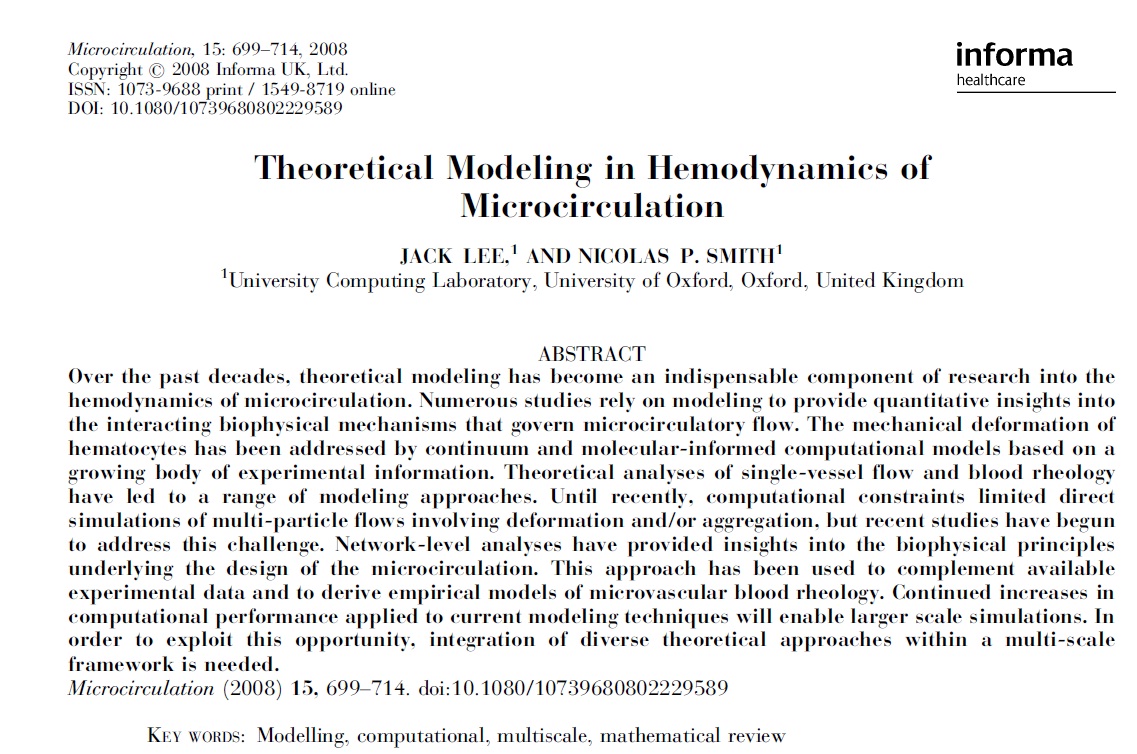
Over the past decades, theoretical modeling has become an indispensable component of research into the hemodynamics of microcirculation. Numerous studies rely on modeling to provide quantitative insights into the interacting biophysical mechanisms that govern microcirculatory flow. The mechanical deformation of hematocytes has been addressed by continuum and molecular-informed computational models based on a growing body of experimental information. Theoretical analyses of single-vessel flow and blood rheology have led to a range of modeling approaches. Until recently, computational constraints limited direct simulations of multi-particle flows involving deformation and/or aggregation, but recent studies have begun to address this challenge. Network-level analyses have provided insights into the biophysical principles underlying the design of the microcirculation. This approach has been used to complement available experimental data and to derive empirical models of microvascular blood rheology. Continued increases in computational performance applied to current modeling techniques will enable larger scale simulations. In order to exploit this opportunity, integration of diverse theoretical approaches within a multi-scale framework is needed.