ترجمه پزشکی -22 صفحه
جریان خون در شبکه های میکرو اسکولار
Blood Flow in Microvascular Networks Experiments and Simulation
A.R. Pries, T.W. Secomb, P. Gaehtgens, and J.F. Gross
سال 1990
https://www.ncbi.nlm.nih.gov/pubmed/2208609
دانلود رایگان مقاله انگلیسی -جریان خون در شبکه
چکیده
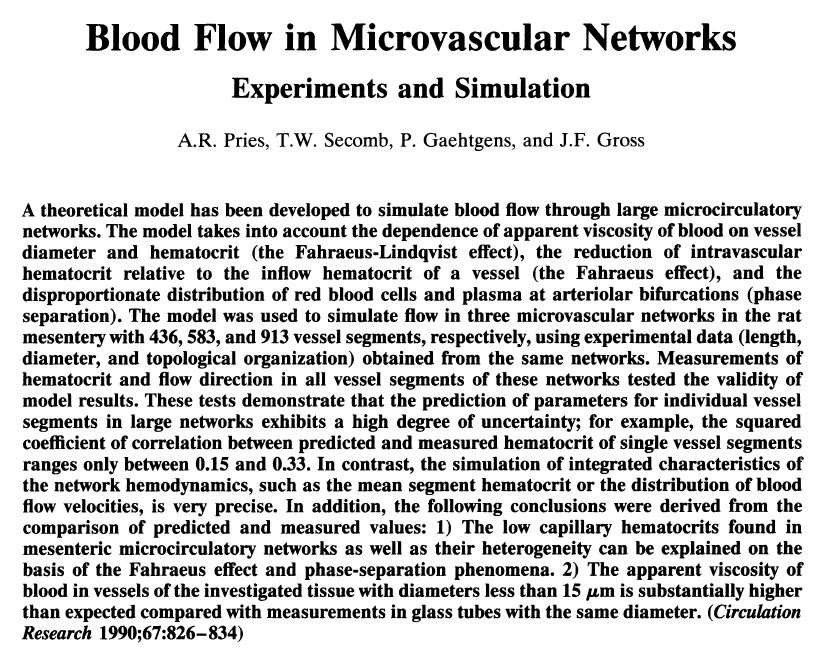
یک مدل نظری برای شبیه سازی جریان خون شبکه های بزرگ ریز جریان ها (ریز مدارها) توسعه یافت. این مدل وابستگی به ویسکوزیته ی جریان در قطر و ضخامت رگ ها و هماتوکریت ،کاهش هماتوکریت درون رگی نسبت به جریان هماتوکریت رگ ها (تاثیر فارئوس)، و پراکندگی نا متناسب سلول های قرمز خون و پلاسما در شاخه ها و انشعابات مویرگ ها ( تقسیم و تفکیک فاز ) را مورد توجه قرار می دهد. این مدل برای شبیه سازی جریان در سه شبکه میکرو اسکولار در روده بند یا حاویه ی موش صحرایی با 436،583 و 913 بخش مویرگی با استفاده از داده های تجربی بدست آمده از شبکه های مشابه مورد استفاده قرار گرفته است ( طول، ضخامت و قطر ، و سازماندهی توپولوژیکی)..اندازه گیری های هماتوکریت و جهت جریان در بخش های مویرگی این شبکه ها اعتبار نتایج این مدل را مورد آزمایش قرار داد. این آزمایشات نشان می دهند که برای نمونه پیش بینی پارامترهای بخش های مویرگی افراد در شبکه های بزرگ درجه ی بالایی از عدم قطعیت را نشان می دهند ، ضریب مجذور پیوستگی بین هماتوکریت اندازه گیری شده و پیش بینی شده ی بخش هی مویرگی منفرد دامنه ای بین 0.15 و 0.33 است. همچنین ، شبیه سازی ویژگی های یکپارچه ی همودینامیک های شبکه مانند میانگین بخش هماتوکریت یا پراکندگی و سرعت توزیع جریان خون بسیار دقیق است. علاوه بر این ، نتیجه گیری های زیر از مقایسه ی مقادیر پیش بینی شده و اندازه گیری شده مشتق شده اند 1. هماتوکریت های ناچیز مویرگی یافته شده براساس تاثیر فارئوس و پدیده ی تفکیک – فاز (مرحله) 2. ویسکوزیته ی قابل رویت خون در بافت رگ های مورد بررسی با ضخامت کمتر از 15um بالاتر از اندازه گیری های مورد انتظار مقایسه شده در لوله های شیشه ای با ضخامت مشابه است( تحقیق در خصوص مسیر گردش خون 1990،67:826-834).
Abstract
A theoretical model has been developed to simulate blood flow through large microcirculatory networks. The model takes into account the dependence of apparent viscosity of blood on vessel diameter and hematocrit (the Fahraeus-Lindqvist effect), the reduction of intravascular hematocrit relative to the inflow hematocrit of a vessel (the Fahraeus effect), and the disproportionate distribution of red blood cells and plasma at arteriolar bifurcations (phase separation). The model was used to simulate flow in three microvascular networks in the rat mesentery with 436,583, and 913 vessel segments, respectively, using experimental data (length, diameter, and topological organization) obtained from the same networks. Measurements of hematocrit and flow direction in all vessel segments of these networks tested the validity of model results. These tests demonstrate that the prediction of parameters for individual vessel segments in large networks exhibits a high degree of uncertainty; for example, the squared coefficient of correlation between predicted and measured hematocrit of single vessel segments ranges only between 0.15 and 0.33. In contrast, the simulation of integrated characteristics of the network hemodynamics, such as the mean segment hematocrit or the distribution of blood flow velocities, is very precise. In addition, the following conclusions were derived from the comparison of predicted and measured values: 1) The low capillary hematocrits found in mesenteric microcirculatory networks as well as their heterogeneity can be explained on the basis of the Fahraeus effect and phase-separation phenomena. 2) The apparent viscosity of blood in vessels of the investigated tissue with diameters less than 15 microns is substantially higher than expected compared with measurements in glass tubes with the same diameter.