ترجمه مدیریت- 25 صفحه
دیدگاه تئوریک تصمیم گیری ارزش برنامه ریزی تجاری قبل از شروع
سال 2011
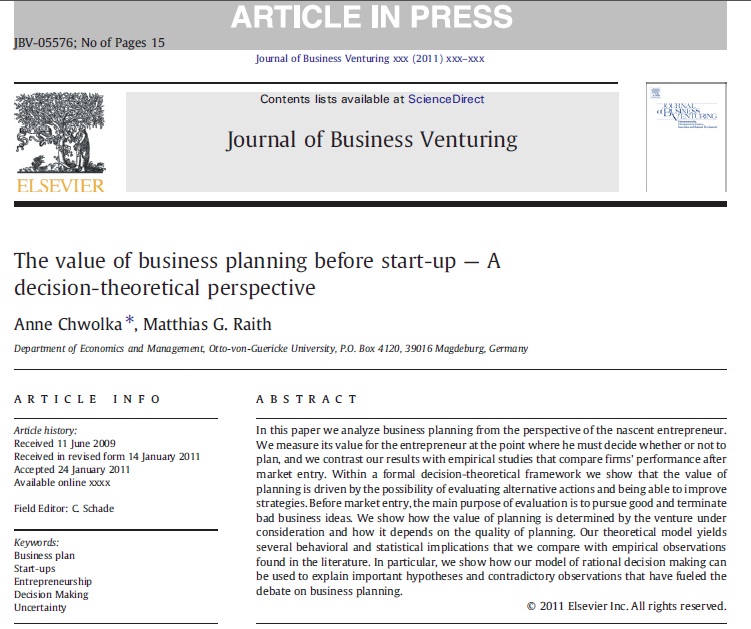
The value of business planning before start-up A decision-theoretical perspective
Anne Chwolka, , Matthias G. Raith
http://dx.doi.org/10.1016/j.jbusvent.2011.01.002
چکیده
در این مقاله برنامه ریزی تجاری را از دیدگاه کارآفرین نوظهور تجزیه و تحلیل میکنیم. ما ارزش برنامه ریزی تجاری را برای کارآفرین در جایی که باید تصمیم بگیرد که آیا برنامه ریزی کند یا خیر اندازه گیری میکنیم و نتایج بحث مان را با مطالعات تجربی که عملکرد سازمان ها را بعد از ورود به بازار مقایسه میکند، میسنجیم. با کمک یک قالب کاری تئوریک تصمیم گیری رسمی نشان میدهیم که ارزش برنامه ریزی از امکان ارزیابی اقدامات متناوب و قدرتمند شدن (توانا شدن) برای بهبود استراتژی ناشی میشود.
قبل از ورود به بازار، علت اصلی ارزیابی، دنبال کردن ایده های تجاری بد است. نشان میدهیم که چگونه ارزش برنامه ریزی در برابر کسب و کار مورد ملاحظه تعیین میشود و چگونه به کیفیت برنامه ریزی بستگی دارد. مدل تئوریک ما، چندین کاربرد آماری و رفتاری را نتیجه داد که با ملاحظات (مشاهدات) تجربی آورده شده در ادبیات مقایسه میکنیم. به خصوص نشان میدهیم چگونه مدل تصمیم گیری عقلائیمان می تواند برای توضیح فرضیات مهم و مشاهدات متناقص که بحث برنامه ریزی تجاری را تقویت کرده اند، بهکار گرفته شود.
Abstract
In this paper we analyze business planning from the perspective of the nascent entrepreneur. We measure its value for the entrepreneur at the point where he must decide whether or not to plan, and we contrast our results with empirical studies that compare firms' performance after market entry. Within a formal decision-theoretical framework we show that the value of planning is driven by the possibility of evaluating alternative actions and being able to improve strategies. Before market entry, the main purpose of evaluation is to pursue good and terminate bad business ideas. We show how the value of planning is determined by the venture under consideration and how it depends on the quality of planning. Our theoretical model yields several behavioral and statistical implications that we compare with empirical observations found in the literature. In particular, we show how our model of rational decision making can be used to explain important hypotheses and contradictory observations that have fueled the debate on business planning.
Research Highlights
► We employ a decision-theoretical approach to analyze the value of business planning. ► In contrast to studies of market performance, our perspective is that of the planner. ► We show that the value of planning is driven by the possibility of avoiding failures. ► We show why better planning may plausibly lead to fewer rather than more startups. ► Our analysis helps to explain empirical, sometimes contradictory observations.
Keywords
Business plan; Start-ups; Entrepreneurship; Decision Making; Uncertainty