ترجمه معماری-5 صفحه
Iranian architecture
معماری ایرانی
نمونه متن ترجمه شده
معماری ایرانی یا معماری فارسی ،معماری ایران معاصر و اقلیم فرهنگی ایران است.
این معماری پیشینه پیوسته ای از حداقل پنج هزارسال قبل ازمیلاد مسیح تا هم اکنون داشته و نمونه های ویژه ای رادرپهنه وسیعی ازجهان ازترکیه وعراق گرفته تاشمال هند وتاجیکستان و ازقفقاز تا زنگیها گسترش یافته است.
بناهای ایرانی از کلبه های روستایی تا چایخانه ها و باغها و عمارتهاگرفته تا بعضی از سازه های شگفت انگیز جهان را دربر میگیرند.
معمولا معماری ایرانی تنوع بسیاری را هم از دیدگاه ساختاری و هم ازلحاظ زیبایی شناسی که بطور وسیع ومنسجمی بواسطه سنتهای اولیه و نیز تجربه بسط یافته ،شامل می شود.این معماری بدون هیچگونه تغییر ناگهانی ، علی رغم اسیب های مککر ناشی از تهاجمات و شوک های فرهنگی به یک تمایز فردی نسبت به دیگر کشورهای مسلمان دست یافته است.
خصوصیات برترآن عبارتنداز:احساس معناداری برای ومقیاس ،نواوری ساختاری ،بویژه درساختار گنبدو طاق.
استعداد خاصی برای تزیین همراه با آزادی و موفقیتی که در هیچ معماری دیگری نظیر ندارد.بطور سنتی ،ایه اصلی قالب معماری ایرانی،نمادپردازی جهان هستی اش می باشد که بواسطه آن آدمی باقدرتهای آسمانی ارتباط برقرار کرده است.
Iranian architecture
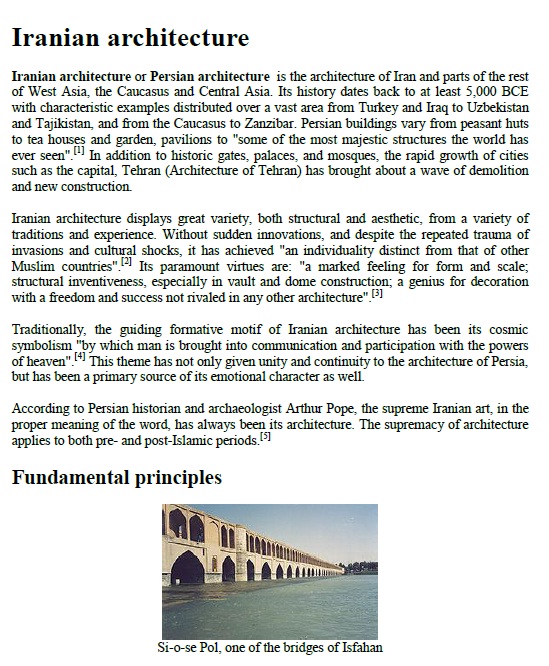
Iranian architecture or Persian architecture is the architecture of Iran and parts of the rest of West Asia, the Caucasus and Central Asia. Its history dates back to at least 5,000 BCE with characteristic examples distributed over a vast area from Turkey and Iraq to Uzbekistan and Tajikistan, and from the Caucasus to Zanzibar. Persian buildings vary from peasant huts to tea houses and garden, pavilions to "some of the most majestic structures the world has ever seen".[1] In addition to historic gates, palaces, and mosques, the rapid growth of cities such as the capital, Tehran (Architecture of Tehran) has brought about a wave of demolition and new construction.
Iranian architecture displays great variety, both structural and aesthetic, from a variety of traditions and experience. Without sudden innovations, and despite the repeated trauma of invasions and cultural shocks, it has achieved "an individuality distinct from that of other Muslim countries".[2] Its paramount virtues are: "a marked feeling for form and scale; structural inventiveness, especially in vault and dome construction; a genius for decoration with a freedom and success not rivaled in any other architecture".[3]
Traditionally, the guiding formative motif of Iranian architecture has been its cosmic symbolism "by which man is brought into communication and participation with the powers of heaven".[4] This theme has not only given unity and continuity to the architecture of Persia, but has been a primary source of its emotional character as well.
According to Persian historian and archaeologist Arthur Pope, the supreme Iranian art, in the proper meaning of the word, has always been its architecture. The supremacy of architecture applies to both pre- and post-Islamic periods.
References
Arthur Upham Pope. Introducing Persian Architecture. Oxford University Press. London. 1971. p.1
Arthur Upham Pope. Persian Architecture. George Braziller, New York, 1965. p.266
Arthur Upham Pope. Persian Architecture. George Braziller, New York, 1965. p.266
Nader Ardalan and Laleh Bakhtiar. Sense of Unity; The Sufi Tradition in Persian Architecture. 2000. ISBN 1-871031-78-8
Arthur Pope, Introducing Persian Architecture. Oxford University Press. London. 1971.
Arthur Upham Pope. Persian Architecture. George Braziller, New York, 1965. p.10
Sabk Shenasi Mi'mari Irani (Study of styles in Iranian architecture), M. Karim Pirnia. 2005. ISBN 964-96113-2-0 p.24. Page 39 however considers "pre-Parsi" as a distinct style.
Arthur Upham Pope. Persian Architecture. George Braziller, New York, 1965. p.9
[1] Archived September 28, 2007, at the Wayback Machine.
Hattstein, Markus; Delius, Peter (2000). Islam Art and Architecture. p. 96. ISBN 3-8290-2558-0.
Hill, Donald R. (1994). Islamic Science and Engineering. p. 10. ISBN 0-7486-0457-X.
"Discovery of brick tablet in Jiroft proves 3rd millennium BC civilization".
Hassan Pour (2013). "The Theoretical Inapplicability of Regionalism to Analysing Architectural Aspects of Islamic Shrines in Iran in the Last Two Centuries" [کاربست ناپذیری نظری رجینالیسم در تحلیل معماری اسلامی ایران در دو قرن گذشته] (PDF). The Collection of articles of the International Congress of Imam's Descendants (Imamzadegan). Esfahan, Iran: The Charity Organisation. 4: 16–32.
"Imam's Mosque". World-heritage-tour.org. 2005-03-12. Retrieved 2011-03-27.
[2][dead link]
"Encyclopædia Iranica | Articles". Iranicaonline.org. 1995-12-15. Retrieved 2011-03-27.
Savory, Roger (1980). Iran under the Safavids. New York: Cambridge University Press. p. 155. ISBN 0-521-22483-7.
Blake, Stephen P. (1999). Half the World, The Social Architecture of Safavid Isfahan, 1590–1722. Costa Mesa: Mazda. pp. 143–144. ISBN 1-56859-087-3.
Canby, Sheila R. (2009). Shah Abbas, The Remaking of Iran. London: British Museum Press. p. 30. ISBN 978-0-7141-2456-8.
Canby, Sheila R. (2009). Shah Abbas, The Remaking of Iran. p. 36.
Hattstein, M.; Delius, P. (2000). Islam, Art and Architecture. Cologne: Köneman. pp. 513–514. ISBN 3-8290-2558-0.
Trends in Modern Iranian Architecture. By Darab DIBA and Mozayan DEHBASHI.
See PBS article
Arthur Upham Pope, Persian Architecture, 1965, New York, p.16
Aga Khan Award for Architecture - Master Jury Report - The Eighth Award Cycle, 1999-2001
Aga Khan Award for Architecture: The Third Award Cycle, 1984-1986
این زمینه نه تنها به معماری ایرانی وحدت ویگانگی وپیوستگی می دهد بلکه منبع تولیه ویژگی احساسی آن هم شده است.
برمبنای تاریخ ایرانی وگفته های باستان شناسی بنام آرتور پاپ، هنر ایرانی برجستگی به معنلی واقعی کلمه را همیشه در معماری خود داشته است.