ترجمه مدیریت-17 صفحه
سال 2006
Relationships between leader reward and punishment behavior and subordinate
attitudes, perceptions, and behaviors: A meta-analytic review of existing and new research
رابطه بین رفتارهای تنبیهی، تشویقی رهبر و دید گاهها، ادراکات و رفتارهای کارمند
Philip M. PodsakoV , William H. Bommer , Nathan P. PodsakoV , Scott B. MacKenzie
http://www.sciencedirect.com/science/article/pii/S0749597805001184
دانلود رایگان مقاله انگلیسی- رابطه بین رفتارهای تنبیهی، تشویقی رهبر
چکیده
با وجود قدمت زیاد مسئله ی ارتباط بین رفتارهای تنبیهی ـ تشویقی رهبر و دید گاه، ادراک و عملکرد کارمند، هیچ بررسی جامعی از ارتباطات این دو در ادبیات تحقیق بیان نشده. این مقاله درباره ی نتایج دو مطالعه است که به بررسی این موضوع پرداخته اند. در اولین مطالعه داده های 20 نمونه ی جدید برای بررسی ارتباط بین رفتارهای تنبیهی ـ تشویقی رهبر و برخی متغیر های معیار جمع آوری شده که به طور گسترده در تحقیقات قبلی بررسی نشده ـ در دومین مطالعه، یک فوق تحقیق انجام شده که ترکیبی از تحقیقات جدید و قدیمی است.
این تحقیق در جهت ارائه ی ارتباطات مستقل بین این رفتارهای رهبر و طیف گسترده ای از متغیر های معیار کارمند انجام شده و شامل 78 مطالعه با 118 نمونه ی مستقل می شود.
نتایج تحلیل ها، برای کنترل تأثیر دیگر رفتارهای رهبر طراحی شده و نشان می دهد که:
(1) ارتباط بین رفتارهای تنبیهی ـ تشویقی و دیدگاه ، ادراک ، رفتار کارمند بیشتر قانونمند و وظیفه ای است زمانی که تنبیه ها و تشویق ها به طور اقتضائی اداره می شود تا زمانی که به طور غیر اقتضائی اداره می شود.
(2) این رفتارهای تنبیهی ـ تشویقی رهبر به شدت به دو متغیر ادراک کارمند از انصاف و عدل و ابهام نقش بستگی دارد که به نظر می رسد واسطه هائی کلیدی در ارتباط بین این رفتارهای رهبر و متغیر های معیار کارمند باشند.
علاوه بر این، نتیجه فرا تحلیل بدست آمده از مطالعات طولی بیان کرد که یک رفتار مشابه رهبر می تواند دلیلی برای برخی متغیر های معیار کارمند و نتیجه ای برای دیگر معیار ها باشد. مفاهیمی از نتایج ، برای تحقیقات آینده در این حوزه ی کاری بحث شده است.
Abstract
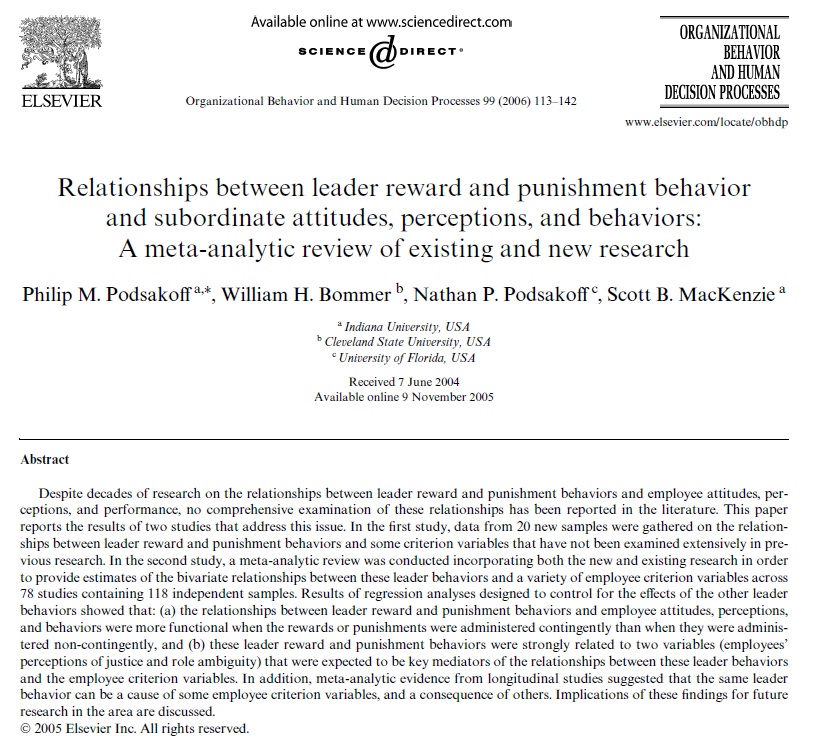
Despite decades of research on the relationships between leader reward and punishment behaviors and employee attitudes, perceptions, and performance, no comprehensive examination of these relationships has been reported in the literature. This paper reports the results of two studies that address this issue. In the first study, data from 20 new samples were gathered on the relationships between leader reward and punishment behaviors and some criterion variables that have not been examined extensively in previous research. In the second study, a meta-analytic review was conducted incorporating both the new and existing research in order to provide estimates of the bivariate relationships between these leader behaviors and a variety of employee criterion variables across 78 studies containing 118 independent samples. Results of regression analyses designed to control for the effects of the other leader behaviors showed that: (a) the relationships between leader reward and punishment behaviors and employee attitudes, perceptions, and behaviors were more functional when the rewards or punishments were administered contingently than when they were administered non-contingently, and (b) these leader reward and punishment behaviors were strongly related to two variables (employees’ perceptions of justice and role ambiguity) that were expected to be key mediators of the relationships between these leader behaviors and the employee criterion variables. In addition, meta-analytic evidence from longitudinal studies suggested that the same leader behavior can be a cause of some employee criterion variables, and a consequence of others. Implications of these findings for future research in the area are discussed.
Keywords
Leader reward and punishment behavior; Contingent reward and punishment behavior; Transactional leadership behavior; Leadership meta-analysis
Recommended articles
Dispelling misconceptions and providing guidelines for leader reward and punishment behavior
2010, Business Horizons
Situational moderators of leader reward and punishment behaviors: Fact or fiction?
1984, Organizational Behavior and Human Performance
Motivation through conscious goal setting
1996, Applied and Preventive Psychology