ترجمه مدیریت -20 صفحه
سال 2012
Individual differences in the relationship between satisfaction with job
تفاوت های فردی مرتبط با رضایت از پاداش شغلی و رضایت شغلی
Joeri Hofmans , Sara De Gieter , Roland Pepermans
Vrije Universiteit Brussel, Work and Organizational Psychology, Pleinlaan , 1050 Brussel, Belgium
http://www.sciencedirect.com/science/article/pii/S0001879112001376
دانلود رایگان مقاله انگلیسی- تفاوت های فردی مرتبط با رضایت از پاداش شغلی
چکیده
اگرچه پژوهش های قبلی اغلب یک ارتباط مثبت بین رضایتمندی از دستمزد و رضایت شغلی نشان داد، ولی در مورد جهان شمولی این یافته ها اختلاف وجود دارد. تجزیه و تحلیل رگرسیون خوشه دانا در سه نمونه به طور مداوم نشان می دهد که دو نوع از افراد هر یک با رابطه های رضایت و پاداش شغلی مختلف متمایز می شوند. برای نوع اول، رضایت شغلی به رضایتمندی از پاداش مالی و روانی مربوط است در حالی که رضایت شغلی دومین نوع فقط به رضایتمندی از پاداش روانی مربوط می شود. علاوه بر این تفاوت بین فردی در مورد امنیت مالی ارزش کاری و نه شناخت مشخص شد که این امر نشان می دهد تفاوت در ارزش کاری ممکن است بر مبنای تفاوت های بین فردی در رابطه رضایتمندی از پاداش نهفته باشد. علاوه بر این افراد نوع 1 و 2 از لحاظ قصد ترک خدمت و تعهد سازمانی موثر متفاوت هستند که این امر نشان می دهد تفاوت ها در رابطه رضایتمندی از پاداش همچنین به نتایج مهم سازمانی مربوط می شود. مفاهیم نظری و عملی این یافته ها مورد بحث قرار گرفت.
کلید واژه ها: رضایت شغلی، پاداش های شغلی، رضایتمندی از دستمزد، تفاوت های فردی، ارزش کاری
Abstract
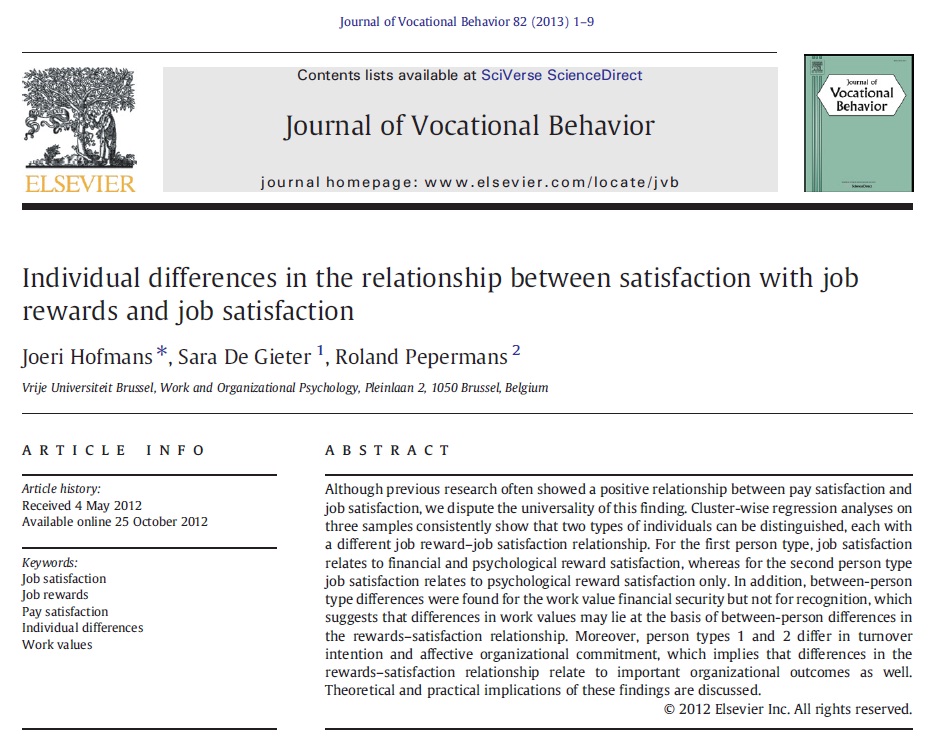
Although previous research often showed a positive relationship between pay satisfaction and job satisfaction, we dispute the universality of this finding. Cluster-wise regression analyses on three samples consistently show that two types of individuals can be distinguished, each with a different job reward–job satisfaction relationship. For the first person type, job satisfaction relates to financial and psychological reward satisfaction, whereas for the second person type job satisfaction relates to psychological reward satisfaction only. In addition, between-person type differences were found for the work value financial security but not for recognition, which suggests that differences in work values may lie at the basis of between-person differences in the rewards–satisfaction relationship. Moreover, person types 1 and 2 differ in turnover intention and affective organizational commitment, which implies that differences in the rewards–satisfaction relationship relate to important organizational outcomes as well. Theoretical and practical implications of these findings are discussed.
Highlights
The universality of the relationship between pay and job satisfaction is disputed.
Individual differences in the job rewards–job satisfaction relationship are tested.
Satisfaction with psychological rewards relates to job satisfaction for everyone.
Satisfaction with financial rewards relates to job satisfaction for a subgroup only.
Between-group differences relate to work values, turnover intention and commitment.
Keywords
Job satisfaction; Job rewards; Pay satisfaction; Individual differences; Work values