ترجمه محیط زیست -14 صفحه
سال 2012
Green space, health inequality and pregnancy
فضای سبز، نابرابری سلامتی و بارداری
Payam Dadvanda, Audrey de Nazellea,Francesc Figuerasd, Xavier Basagañaa, Jason Sue
, Elmira Amolyf, Michael Jerrette, Martine Vrijheida,Jordi Sunyer
http://www.sciencedirect.com/science/article/pii/S0160412011001905
دانلود رایگان مقاله انگلیسی- فضای سبز، نابرابری سلامتی و بارداری
چکیده
فضاهای سبز برای بهبود سلامت جسمانی و روانی و تندرستی با افزایش فعالیت جسمانی ،کاهش آلودگی هوا، سر و صدا و دمای محیط، افزایش تماسهای اجتماعی و رهایی از استرس روان- فیزیولوژی پیشنهاد شده اند.گرچه این مکانیسم ها هم چنین اثرات مفید احتمالی فضاهای سبز را بر روی پیامدهای بارداری ارائه میدهند، اما طبق دانش ما، مدارک همه گیر شناسی بر روی این اثر، موجود نیست.ما اثرات سبزی و تازگی محیط و مجاورت و نزدیک با فضاهای سبز بزرگ را بر روی وزن تولد و سن جنین در زمان زایمان را بررسی کردیم و اثر موقعیت اجتماعی- اقتصادی (SEP) را بر روی این روابط توصیف کردیم.این مطالعه بر مبنای یک گروه از تولدهاست (تعداد= 8246) که در یک بیمارستان دانشگاهی بزرگ در بارسلونای اسپانیا در طول سالهای 2005-2001 روی داده است.ما سبزی محیط را از بازیابی های ماهواره ای به عنوان میانگین شاخص پوشش گیاهی اختلاف هنجار شده (NDVI) در یک واسطه 100 متری دور هر محل سکونت مادر را توصیف کردیم.برای بررسی مجاورت با فضاهای سبز بزرگ، یک متغیر دودوئی برای بیان این مسئله بکار رفت که آدرس سکونت ماد در یک واسطه ی 500 متری از مرزهای یک فضای سبز واقع میشود.برای هر شاخص مواجهه سبز ،مدلهای رگرسیون خطی برای تخمین تغییر در پیامدهای تنظیم شده برای کوورینت های مرتبط ساخته شدند از جمله SEP سطح ناحیه و انفرادی.هیچ یک از این شاخصهای مواجهه سبز به وزن تولد و سن جنین مربوط نبود.پس از ارزیابی تعدیل اثر بر مبنای سطح آموزش به مادر، ما یک افزایش در وزن (بر حسب گرم) تولد را بین پایین ترین گروه سطح آموزش کشف کردیم (تعداد = 164) که NDVI محیط بالاتری داشت (ضریب رگرسیون) (بازه اطمینان 95%) (CI) از 436.3 (829.5، 43.1) یا زندگی در نزدیکی یک فضای سبز بزرگ (ضریب رگرسیون (CI 95%)).یافته های ما حاکی از یک اثر مفید مواجه با فضاهای سبز بر روی وزن تولد فقط در گروه با پایین ترین SEP بود.
Abstract
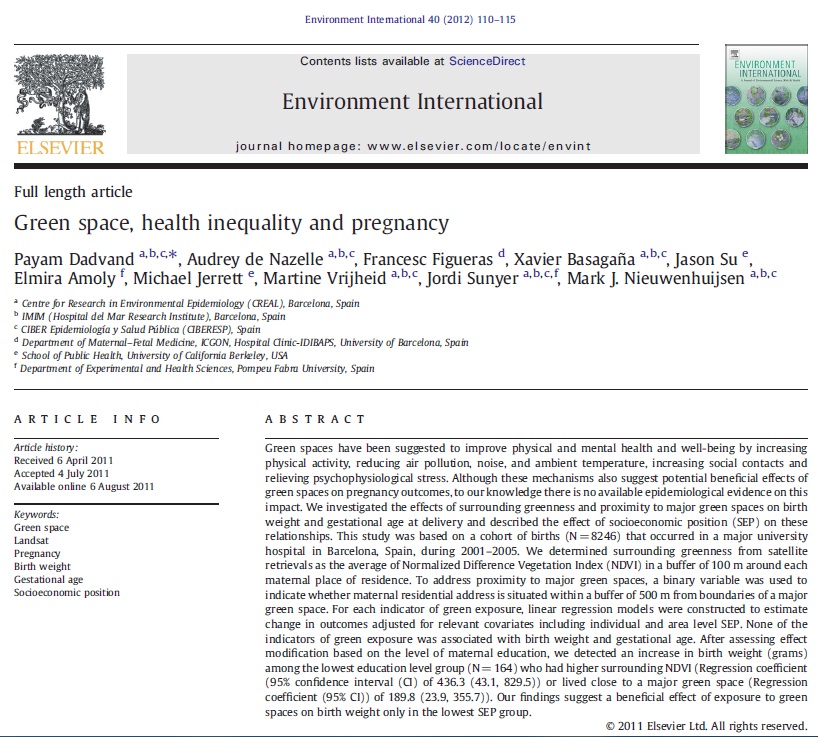
Green spaces have been suggested to improve physical and mental health and well-being by increasing physical activity, reducing air pollution, noise, and ambient temperature, increasing social contacts and relieving psychophysiological stress. Although these mechanisms also suggest potential beneficial effects of green spaces on pregnancy outcomes, to our knowledge there is no available epidemiological evidence on this impact. We investigated the effects of surrounding greenness and proximity to major green spaces on birth weight and gestational age at delivery and described the effect of socioeconomic position (SEP) on these relationships. This study was based on a cohort of births (N = 8246) that occurred in a major university hospital in Barcelona, Spain, during 2001–2005. We determined surrounding greenness from satellite retrievals as the average of Normalized Difference Vegetation Index (NDVI) in a buffer of 100 m around each maternal place of residence. To address proximity to major green spaces, a binary variable was used to indicate whether maternal residential address is situated within a buffer of 500 m from boundaries of a major green space. For each indicator of green exposure, linear regression models were constructed to estimate change in outcomes adjusted for relevant covariates including individual and area level SEP. None of the indicators of green exposure was associated with birth weight and gestational age. After assessing effect modification based on the level of maternal education, we detected an increase in birth weight (grams) among the lowest education level group (N = 164) who had higher surrounding NDVI (Regression coefficient (95% confidence interval (CI) of 436.3 (43.1, 829.5)) or lived close to a major green space (Regression coefficient (95% CI)) of 189.8 (23.9, 355.7)). Our findings suggest a beneficial effect of exposure to green spaces on birth weight only in the lowest SEP group.
Highlights
► No available evidence on pregnancy-green exposure link.
► Beneficial effect of green exposure on birth weight in lower socioeconomic group.
► No beneficial effect of green exposure on gestational age at delivery.
► Socioeconomic status is an effect modifier for the birth weight-green exposure link.
Abbreviations
ETM+, Landsat Enhanced Thematic Mapper Plus; NDVI, Normalized Difference Vegetation Index; SEP, Socioeconomic position
Keywords
Green space; Landsat; Pregnancy; Birth weight; Gestational age; Socioeconomic position
Recommended articles
Comment on “Green Space, health inequality, and pregnancy”
2012, Environment International
More green space is linked to less stress in deprived communities: Evidence from salivary cortisol patterns
2012, Landscape and Urban Planning
Urban trees and the risk of poor birth outcomes
2011, Health & Place