ترجمه کشاورزی -20 صفحه
Impact of climate change on agriculture and food safety
اثرات تغییر اقلیمی روی کشاورزی و ایمنی غذایی
دانلود رایگان انگلیسی- اثرات تغییر اقلیمی روی کشاورزی و ایمنی غذایی
نمونه متن ترجمه شده
اثرات تغییر اقلیمی روی کشاورزی و ایمنی غذایی چین موضوعات مهم مورد بحث به صورت جداگانه توسط محققین علوم کشاورزی و اقتصاددان ها از دهه 1990 بوده است. در سال های اخیر، روش های ارزیابی ترکیبی متمرکز بر تحقیق اثر تغییر اقلیم ایجاد شده و به گستره وسیعی از زمینه ها، از جمله مدیریت، کاربری زمین و کشاورزی اعمال شده است. برای کاربردهای کاربردی علمی، روش های ترکیبی مزیت های متمایزی در تحقیق اثر تغییر اقلیمی دارند که در آن چندین سیستم طبیعی و اجتماعی-اقتصادی در نظر گرفته شده اند. این معمولا شامل مجموعه های گسترده داده ها و مدل ها است که همه آن ها نیازمند به روزرسانی هستند زیرا درک علمی و اطلاعات ارتقا می یابد. چندین تلاش برای ترکیب کشاورزی، اقتصاد غذایی و تغییر اقلیمی در بسیاری جهات انجام شده است، به صورتی که در فصل 1 مشخص شد. تقاضای فوری برای تحقیق و ارزشیابی گزینه های تطابق با تغییر اقلیمی توسط دولت ها و سهامداران در حال افزایش است. در این زمینه، مدل های قابل محاسبه ابزارهای مفید و موثری برای ارزیابی کمی بازدهی تطابق ها هستند.
Sample
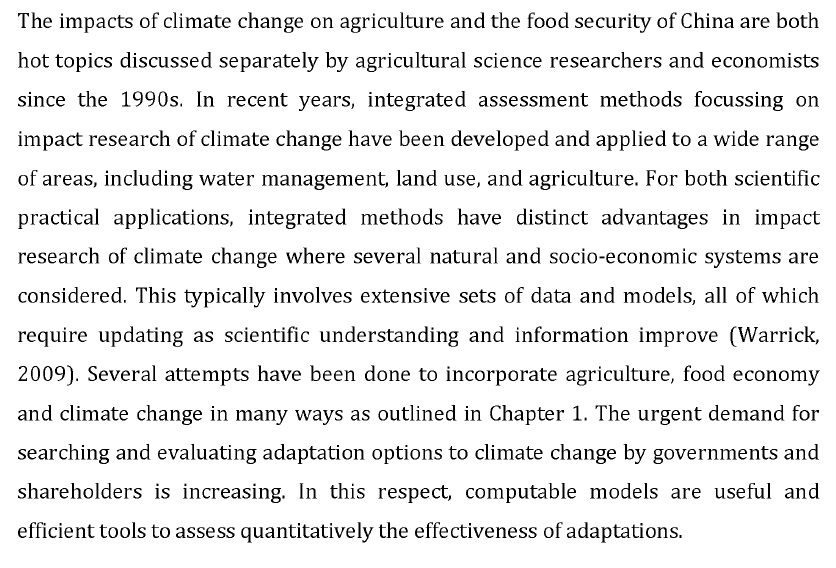
The impacts of climate change on agriculture and the food security of China are both hot topics discussed separately by agricultural science researchers and economists since the 1990s. In recent years, integrated assessment methods focussing on impact research of climate change have been developed and applied to a wide range of areas, including water management, land use, and agriculture. For both scientific practical applications, integrated methods have distinct advantages in impact research of climate change where several natural and socio-economic systems are considered. This typically involves extensive sets of data and models, all of which require updating as scientific understanding and information improve (Warrick, 2009). Several attempts have been done to incorporate agriculture, food economy and climate change in many ways as outlined in Chapter 1. The urgent demand for searching and evaluating adaptation options to climate change by governments and shareholders is increasing. In this respect, computable models are useful and efficient tools to assess quantitatively the effectiveness of adaptations